Aburrimiento / Boredom
Spanish 🇪🇸 | English (🇬🇧, 🇺🇸, ...)
Aburrimiento
Últimamente tengo momentos en los que pienso que quiero hacer más cosas, pero no sé qué hacer… Desde hace tiempo utilizo las notas de mi móvil, y a veces libretas físicas, como medio para descargar aquellos pensamientos / ideas / to-do’s que me vienen de repente y que creo que puede merecer la pena guardar. Pero últimame también siento que no me llegan tantas ideas como antes, y no anoto tantas ideas propias como solía en mis notas…
Para hacer cosas (más allá de nuestras obligaciones) hay que tener cosas que hacer.
Para tener cosas que hacer hay que querer hacer ciertas cosas.
Para querer hacer ciertas cosas se te tiene que ocurrir esa cosa que quieres hacer, debes tenerla en mente.
Para que se te ocurra esa cosa, tienes que pensar, o dejar que aparezca por arte de magia (extraño pero frecuente).
Para pensar y que se te ocurra esa cosa tienes que darte tiempo para reflexionar de forma deliberada. Para dejar que aparezca, también tienes que pensar, pero esta vez de forma no deliberada, por ejemplo mientras haces alguna otra cosa.
Dar tiempo a idear, o a que aparezcan pensamientos, es algo que requiere que la mente deambule. Que de giros sobre sí misma, o alrededor de un tema o a veces, de ninguno.
Y para que tu mente haga esto, hay que aburrirse.
Es decir:
- Quiero tener más ideas. Para eso necesito que se me ocurran estas ideas.
- Quiero usar esas ideas: para aprender de ellas, para desarrollarlas, para convertirlas en acción…
- Para ello hace falta, en primer lugar, un entorno / estado que favorezca la aparición de estas ideas.
- Por otro lado, hace falta también un entorno / estado en el que se puedan desarrollar y llevar a cabo más allá de una idea inicial.
Pensando sobre este problema y posibles soluciones, una causa parece clara: creo que en parte, lo que me pasa es que no me aburro lo suficiente. Y quizás esto sea algo que le pasa a más gente; creo que, últimamente, no nos aburrimos lo suficiente. En nuestro día a día, para la mayoría cada vez es más raro tener un momento a solas con nuestros pensamientos, incluso cuando estamos solos, en parte porque en todo momento buscamos escapar del aburrimiento con algún estímulo.
Quiero aclarar que ya que estoy hablando del aburrimiento, debería aclarar a que me refiero. Para mí, una definición adecuada sería algo como: un sentimiento temporal de incomodidad o molestia que nos empuja a reorientar nuestra atención de alguna forma.
También me refiero al aburrimiento a través de “cosas aburridas”: tareas mundanas y poco estimulantes que nos incitan a “escapar” de ellas de nuevo, mediante la redirección de atención que mencionaba antes. Creo que esta segunda forma de ver el aburrimiento es importante porque lo contrapone al estímulo y tareas estimulantes, que a día de hoy están por todas partes y de las que puede ser difícil escapar. Supongo que dentro de mi definición, entonces, se incluyen también los momentos “silenciosos”, que quizás no siempre se asociarían con el aburrimiento tradicional.
También voy a usar mi definición amplia y particular de idea; un concepto, una tarea, un recuerdo, un sonido específico, son todos ideas. Representaciones mentales de elementos arbitrarios, fruto de la acción de pensar; es decir, una idea es cualquier cosa que puedas pensar. Un pensamiento, como sustantivo, y no verbo, es (para mí) una idea en proceso, en cambio, o que está aún formándose. Pero generalmente, las ideas que me interesan son las que son buenas, las que tienen un cierto valor o significado especial.
Tener ideas y el aburrimiento
Muchas veces he notado, y sé que no soy el único, que hay momentos aburridos en los que producimos algunas de nuestras ideas más interesantes: en la ducha, dando un paseo, fregando los platos, en una clase en la que has perdido el hilo y ya no estás prestando atención, en el tren (sin wifi)…
Según yo lo entiendo, el responsable de la aparición de esas ideas es el aburrimiento 1 . Como mecanismo mental es tremendamente ingenioso: está ahí para quitar nuestra atención de cierta tarea y orientarnos hacia otra, una que sea capaz de capturarnos mejor. Crea la inercia necesaria para salir de un estancamiento mental.
Esta noción de mover nuestra atención hacia algo que nos guste más es, obviamente, un arma de doble filo. Es así como acabamos escapando a estímulos instantáneos y recompensas vacías cuando nos vemos frente a una situación poco estimulante / aburrida. De esto hablaré más adelante, aunque creo que es importante destacarlo: sólo si alineamos correctamente nuestra intención a la hora de escapar del aburrimiento podremos aprovecharnos de el.
Aún así, cuando se usa adecuadamente es muy útil. La molestia que produce el aburrimiento nos empuja a la reflexión como vía de escape de sí mismo. ¿Por qué?
Bueno, como decía al principio:
Para tener cosas que hacer hay que querer hacer ciertas cosas.
Para querer hacer ciertas cosas se te tiene que ocurrir esa cosa que quieres hacer, debes tenerla en mente.
Es decir, escapar el aburrimiento (con una intención) nos obliga a averiguar que es lo que nos importa en ese momento, qué es lo que queremos hacer, para dirigir nuestra atención a ello.
¿Que estoy haciendo, por qué lo estoy haciendo, que querría estar haciendo, que debería estar haciendo? ¿Qué quiero querer?
Estas preguntas son las que se deberían resolver para ponerse en acción hacia un objetivo. Enfrentarse y resolver estas preguntas es una forma directa de ejercer nuestra agencia y orientar nuestras acciones.
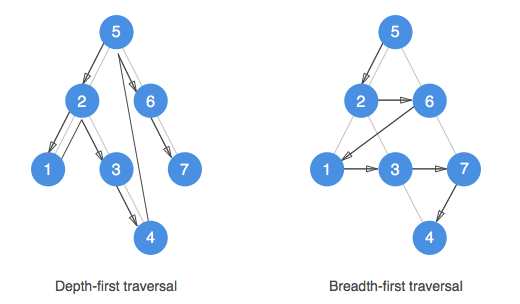
Pero preguntarse esto de forma directa cuando se aburre no es lo habitual, al menos no todas y cada una de estas preguntas (su respuesta no suele ser clara ni sencilla). En su lugar, al menos en mi experiencia, la mente empieza a divagar, si no hay un objetivo claro: cruzando de idea a idea rápidamente sin pararse demasiado, una especie de “búsqueda en anchura” mental en la que se van trayendo conceptos y memorias de todas partes del cerebro.
Esto, de forma implícita, es una forma de resolver estas preguntas; traemos ideas hasta que una encaje con lo que queremos, con algo a lo que movernos a continuación. Y también es este proceso el que, por el camino, deja un rastro de ideas a medio formar y segmentos de pensamiento que son los que busco cuando hablo de “tener ideas”.
Disfruto mucho de este proceso, porque nunca sé lo que me voy a encontrar. A veces son cosas que están en segundo plano mental, tareas mundanas como ir a la compra, obligaciones, trabajo… Otras son menos “actuables”: frases de gente que llevan a otras frases, monólogos internos que duran segundos o minutos, recuerdos de momentos pasados, una imagen concreta, o una que no existe… Es como entrar en el desván de mi mente, e ir encontrando cosas que no recordaba que había guardado ahí.
Así que así es como (al menos en mi experiencia) surgen las ideas. Por supuesto no es la única forma, y pueden aparecer en más escenarios, como en conversaciones, leyendo o realizando alguna otra actividad, o en momentos llenos de estímulos en los que la actividad mental está al 200%, pero estas formas de atraer a las ideas no son tan consistentes, porque son más difíciles de poner en marcha uno mismo.
¿Y lo de desarrollar y usar las ideas?
Esto es otra historia, aunque es parte de lo que acabo de hablar en cierto modo: si este estado de “flujo de ideas” al que nos lleva el aburrimiento trae cosas de la parte de atrás de nuestra mente y las pone en primer plano, siempre les daremos un par de vueltas y quizá las relacionemos y fusionemos con otras ideas, dando lugar a alguna nueva, o a una más desarrollada. Si la idea es una acción o tarea que queremos realizar, y es lo suficientemente buena para “usarla” y salir del aburrimiento, entonces gravitaremos hacia ella, y se hará.
Pero para un verdadero desarrollo, para convertir una idea semilla en un árbol, no creo que lo mejor sea depender del aburrimiento para pensar sobre el tema. Para esto hay que trabajar la idea de forma directa; traer la atención hacia ella y asegurarse de a dónde va, que se quiere hacer con ella, dividirla en partes y hacer/desarrollar cada una. Un poco como este post, que empezó como un pensamiento—“¿por qué ya no escribo tantas ideas como antes en mis notas?”—y acabó como una reflexión caótica de varias partes sobre el posible porqué, la posible solución, y los temas relacionados con cada uno.
Se pueden trazar paralelismos entre esta noción de “tener” y “desarrollar” ideas con los conceptos de pensamiento divergente y convergente, en los que se exploran muchas ideas de forma no estructurada vs. se profundiza en una serie de ideas prefijadas para encontrar una “respuesta correcta”; para esta segunda, el proceso es muy distinto, y no es en lo que me quería centrar en este post.
¿Por qué escapamos tanto del aburrimiento?
Como decía antes, el aburrimiento no es un mecanismo perfecto, y puede actuar en nuestra contra. Creo que el ejemplo más claro de esto lo tenemos en el uso de medios de entretenimiento, streaming, redes sociales y consumo de información a nuestra disposición inmediata. Es ya normal el hecho de rellenar cada momento de nuestro tiempo con estos estímulos, en parte porque representan una forma de apartar la sensación de aburrimiento o sensaciones negativas en general.
Los gigantes tecnológicos (y también otros sectores) explotan esta necesidad de evitar el aburrimiento como medio para conseguir su objetivo de retener la atención durante la mayor cantidad de tiempo posible, obtener la mayor cantidad de telemetría y datos de comportamiento de los usuarios, y embutirlos con “experiencias personalizadas” (anuncios microsegmentados) a la vez que venden los datos que pueden a terceros.
Por otro lado, existen ciertas narrativas entorno a las que nos movemos día a día, tomando nuestras decisiones bajo su influencia pero a veces sin saberlo.
Existe, por un lado, un relato del “tiempo perdido” en el que se nos cuenta que cada momento en el que no estamos “haciendo nada”, es un momento malgastado, así que; ¿por qué no rellenar esos momentos consumiendo contenido, sea de entretenimiento o de otro tipo?
Por supuesto, la alternativa que se nos plantea acerca de qué hacer con nuestro tiempo es una de consumo, no de creación—o simplemente, de descanso o parada. Pararse, pausar un momento y aceptar aburrirse es un malgasto, pudiendo entrar a X (Twitter) a ver lo que está pasando en nuestras burbujas algorítmicas personales, o haciendo las misiones diarias del Pockémon TCG Pocket. La inmediatez impresa en estas situaciones y su “caducidad” cultural en el caso de noticias (o literal en el caso de las misiones diarias) nos empuja a engancharnos a ellas. ¿Y si mientras divagaba en el bus, ha pasado algo en Instagram de lo que debería haberme enterado? Si durante el viaje de tren veo ese vídeo que tengo pendiente, luego tendré más tiempo para ver otros…
En mi experiencia, esta fijación con rellenar todos y cada uno de nuestros momentos con “contenido” me aleja de la claridad mental necesaria para idear, y para tomar acción, y en exceso me deja en un estado de desgana en el que los eventos e interacciones parecen no ser suficientes comparado al estímulo que acabo de experimentar. La tolerancia al aburrimiento más mínimo se dispara. Las cosas mundanas pierden su brillo—siempre hay algo mejor que se podría ver, hacer, escuchar, y a sólo una solicitud HTTP de distancia…
Finalmente, esta noción de pérdida del tiempo y la solución que se nos da para rellenarlo nos lleva a lo que para mí es su efecto más nocivo: la inacción y la pérdida de agencia 2 . Si nunca nos tenemos que preguntar que hacer—porque, en caso de duda, lo que podemos hacer es tan obvio, tan fácil, y es un conjunto tan prediseñado y engranado en/para nosotros—nunca haremos nada fuera de ese conjunto. Si en en cada momento en el que debemos decidir qué hacer, no ejercemos la capacidad de actuar en el mundo siguiendo nuestro propio criterio, la perdemos.
La otra concepción de la que me interesa hablar es del mito del multitasking, que también nos afecta a la hora de aburrirnos; creyendo que no solo debemos estar constantemente haciendo cosas, sino que además podemos hacer eficientemente varias de estas cosas a la vez, se rompe aún más nuestra concentración e intencionalidad. Esta noción del multitasking es falsa; en la literatura psicológica, se habla de task-switching, que implica que cambiamos rápidamente de tarea, no hacemos varias a la vez. Sólo podemos realizar tareas de forma concurrente, no paralela, y al hacerlo, residuos de atención de la tarea anterior pasan a la siguiente, eliminando gran parte de nuestra capacidad cognitiva en esta.
Combinando estas nociones de multitasking y tiempo perdido, es muy fácil mantenerse ocupado constantemente con cualquier cosa, sin nunca dar tiempo a nuestra mente a vagar durante un momento. ¿Te suena alguna de estas?
- Acabar de comer y pasar al instante a ver una serie o hacer alguna cosa (ya no hablo de ver una serie o un vídeo mientras se come).
- Sentir la necesidad de estar escuchando música o podcasts mientras andamos, cocinamos o incluso mientras estudiamos—algo que, se supone, requiere una concentración completa.
- Rellenar nuestro tiempo libre, silencios y horas muertas con series, películas y videojuegos… Estos medios son formas de arte, pero muchas veces los reducimos a bienes de consumo sólo con el objetivo de que ocupen el espacio que le corresponde a nuestros pensamientos, y no con el fin de experimentarlos como las obras que son.
Por supuesto que yo también experimento esto, si no no conocería todos estos ejemplos tan bien. Como ya he dicho, me aburro mucho menos de lo que querría.
No estoy seguro, pero es posible que estos conceptos hayan sido fomentados y popularizados de forma explícita por partes interesadas, ya que se alinean muy bien con el dualismo consumo/producción constante de nuestra era digital: o creas contenido o lo consumes, sin una tercera opción a, bueno, no hacer ninguna de esas. Si no tienes que hacer se te incita a consumir. Si quieres estar por encima del consumo, produce para que otros consuman.
No existe el “no hacer nada”. Aburrirse nos lleva a pensar. Y pensar, soñar despierto, imaginar, o como se le quiera llamar, es hacer algo. Así que obviamente cuando no estamos haciendo mas que pensar, estamos pensando. Y si no hacemos más que aburrirnos, y no tenemos otra forma de “saciar” nuestra sed de estímulos, empezaremos a pensar. Y de esta acción de pensar, surgirán las ideas.
De vez en cuando hay que encontrar tiempo para aburrirse. Un momento en el que se haga nada—ni móvil, ni tareas rutinarias, ni siesta, ni meditación, ni deporte, ni trabajo… Nada. Sólo sentarse (o no) y parar un momento. Esperar, y con un par de minutos las ideas vendrán solas, la bola del pensamiento empezará a rodar.
Es esta parada deliberada, este aburrimiento, el que nos impulsa a resolver problemas de propósito y significado, el qué y el por qué, la acción y la idea.
Boredom
Lately, I have moments when I think I want to do more things, but I don't know what to do... For a long time, I've been using the notes on my phone, and sometimes physical notebooks, as a way to offload thoughts/ideas/to-dos that suddenly come to mind and seem worth saving. But lately, I also feel that I don’t come up with as many ideas as before, and I don’t write down as many of my own ideas in my notes as I used to...
To do things (beyond our obligations), we need to have things to do.
To have things to do, we need to want to do certain things.
To want to do certain things, you need to come up with those things you want to do—you need to have them in mind.
For those things to come to mind, you have to think, or let them appear as if by magic (strange but frequent).
To think and come up with those things, you need to give yourself time to reflect deliberately. To let them appear, you also need to think, but this time in a non-deliberate way, for example, while doing something else.
Giving time to ideate or letting thoughts emerge requires the mind to wander. To turn around itself, around a topic, or sometimes, around nothing at all.
And for your mind to do this, you need to be bored.
That is:
- I want to have more ideas. For that, I need to come up with those ideas.
- I want to use those ideas: to learn from them, to develop them, to turn them into action...
- To do this, first of all, we need an environment/state that encourages the emergence of these ideas.
- On the other hand, we also need an environment/state where they can be developed and carried out beyond just an initial idea.
Thinking about this problem and possible solutions, one cause seems clear: I think part of what’s happening is that I don’t get bored enough. And maybe this happens to more people; I think, lately, we don’t get bored enough. In our daily lives, for most of us, it’s becoming increasingly rare to have a moment alone with our thoughts, even when we are alone, partly because we constantly seek to escape boredom with some stimulus.
I want to clarify what I mean when I talk about boredom. To me, an appropriate definition would be something like: a temporary feeling of discomfort or unease that pushes us to redirect our attention in some way.
I also refer to boredom through “boring things”: mundane and unstimulating tasks that once again prompt us to “escape” from them through the redirection of attention I mentioned earlier. I think this second way of seeing boredom is important because it contrasts with stimulation and stimulating tasks, which are everywhere today and can be hard to escape. I suppose that within my definition, then, “quiet” moments are also included, which might not always be associated with traditional boredom.
I’m also going to use my broad and particular definition of an idea: a concept, a task, a memory, a specific sound—they are all ideas. Mental representations of arbitrary elements, born from the act of thinking; that is, an idea is anything you can think of. A thought, as a noun and not a verb, is (for me) an idea in progress, changing, or still forming. But generally, the ideas that interest me are the good ones, those that have a certain value or special meaning.
Having Ideas and Boredom
Many times, I have noticed—and I know I’m not the only one—that it's in the boring moments when we come up with some of our most interesting ideas: in the shower, while taking a walk, washing the dishes, in a class where you’ve lost track and are no longer paying attention, on a train ride...
As I understand it, boredom is responsible for these ideas appearing 1. As a mental mechanism, it is incredibly clever: it exists to shift our attention from a certain task to another, one that can capture us better. It creates the inertia needed to break out of mental stagnation.
This notion of shifting our attention to something more engaging is, obviously, a double-edged sword. This is how we end up escaping into instant stimuli and empty rewards when faced with an unstimulating/boring situation. I’ll talk more about this later, though I think it’s important to highlight: only if we correctly align our intention when escaping boredom can we take advantage of it.
Still, when used correctly, it is very useful. The discomfort caused by boredom pushes us to reflection as a way to escape itself. Why?
Well, as I said at the beginning:
To have things to do, you need to want to do certain things.
To want to do certain things, you need to come up with those things you want to do—you need to have them in mind.
That is, escaping boredom (with intention) forces us to figure out what matters to us at that moment, what we want to do, to direct our attention toward it.
What am I doing, why am I doing it, what would I like to be doing, what should I be doing? What do I want to want?
These questions should be answered to take action toward a goal. Facing and resolving these questions is a direct way to exercise our agency and guide our actions.
But asking ourselves these questions directly when bored is not the usual approach, at least not all of them (the answers are not usually clear or simple). Instead, at least in my experience, the mind starts to wander if there is no clear goal: jumping from idea to idea quickly without lingering too long, a sort of mental “breadth-first search” where concepts and memories are brought from all over the brain.
This, implicitly, is a way to answer these questions; we bring up ideas until one fits what we want, something to move toward next. And it is also this process that, along the way, leaves a trail of half-formed ideas and segments of thought, which are what I seek when I talk about “having ideas.”
I enjoy this process a lot because I never know what I’m going to find. Sometimes, it’s things in the background of my mind, mundane tasks like grocery shopping, obligations, work… Other times, they are less “actionable”: phrases from people leading to other phrases, internal monologues lasting seconds or minutes, memories of past moments, a specific image, or one that doesn’t exist… It’s like entering the attic of my mind and finding things I didn’t remember I had stored there.
So, this is how (at least in my experience) ideas arise. Of course, it’s not the only way, and they can appear in other scenarios, like in conversations, reading or engaging in some other activity, or in moments full of stimuli when mental activity is at 200%, but these ways of attracting ideas are not as consistent because they are harder to set up on one’s own.
And What About Developing and Using Ideas?
This is another story, although it is somewhat related to what I just mentioned: if this state of "idea flow" induced by boredom brings things from the back of our minds to the forefront, we will always ponder them a bit, possibly connecting and merging them with other ideas, leading to something new or more developed.
If the idea is an action or task we want to carry out, and it is compelling enough to “use” and break free from boredom, then we will naturally gravitate toward it, and it will get done.
However, for true development, for turning a seed idea into a tree, I don't believe it's best to rely on boredom to think about it. Instead, the idea must be worked on directly: bringing attention to it, ensuring clarity on where it’s going, determining what we want to do with it, breaking it down into parts, and developing each one.
Much like this post, which started as a simple thought—"why am I no longer writing down as many ideas in my notes as before?"—and ended up as a chaotic reflection in multiple parts on the possible reasons, the potential solution, and some related topics.
There are parallels to be drawn between this notion of "having" and "developing" ideas and the concepts of divergent and convergent thinking, where many ideas are explored in an unstructured way vs. delving into a predefined set of ideas to find a “correct answer.” The process for the latter is entirely different, and not what I wanted to talk about in this post.
Why Do We Escape Boredom So Much?
As I mentioned earlier, boredom is not a perfect mechanism and can sometimes work against us. Perhaps the clearest example of this is our consumption of entertainment, streaming services, social media, and the endless supply of instantly available information.
Filling every moment with these stimuli has become the norm, partly because they provide a way to push aside boredom or negative feelings in general.
Tech giants (and other industries) exploit this need to avoid boredom as a means to achieve their goal of capturing attention for as long as possible, collecting vast amounts of telemetry and behavioral data from users, and bombarding them with "personalized experiences" (micro-segmented ads) while selling whatever data they can to third parties.
Beyond that, certain cultural narratives shape our daily decisions, often without us realizing it.
For example, take the concept of "wasted time," which tells us that every moment spent “doing nothing” is a moment squandered. So, why not fill those moments by consuming content, be it entertainment or something else?
Of course, the alternative we are offered for how to spend our time is always consumption, never creation—or simply resting or pausing. To stop, to pause for a moment and accept boredom is seen as a waste, when we could instead be checking X (Twitter) to see what’s happening in our algorithmic bubbles, or completing daily missions in Pokémon TCG Pocket.
The immediacy and “expiration” imprinted onto these situations (cultural in the case of news, literal in the case of daily missions) push us to stay hooked. What if, while I was daydreaming on the bus, something happened on Instagram that I should have seen? If I watch that video I’ve been meaning to during my train ride, I’ll have more time later to watch some more…
In my experience, this fixation on filling every single moment with “content” takes me further away from the mental clarity needed to generate ideas and take action. In excess, it leaves me in a state of apathy where events and interactions feel underwhelming compared to the stimulation I just experienced.
Tolerance for even the slightest boredom plummets. Mundane things lose their charm—there’s always something better/more stimulating to watch, do, or listen to, only one HTTP request away…
Ultimately, this notion of wasted time and the ready-made solution to fill it leads to what I see as its most harmful effect: inaction and a loss of agency 2.
If we never have to ask ourselves what to do—because, in moments of doubt, what we can do is so obvious, so easy, and consists of such a pre-designed, ingrained set of options—we will never do anything outside of that set.
If, at every moment when we must decide what to do, we don’t exercise our ability to act on the world according to our own criteria, we lose it.
The other concept I find interesting to discuss is the myth of multitasking, which also affects how we handle boredom.
Not only do we believe that we must always be doing something, but also that we can efficiently do multiple things at once. This further fragments our focus and intentionality.
However, this notion of multitasking is false; psychological literature refers to it as task-switching, meaning that we rapidly switch between tasks rather than performing them simultaneously.
We can only carry out tasks concurrently, not in parallel, and when we do, attentional residue from the previous task lingers into the next one, significantly reducing our cognitive capacity on this new task.
When combining the concepts of multitasking and wasted time, it becomes incredibly easy to stay constantly busy with anything, never giving our minds a moment to wander.
Do any of these sound familiar to you?
- Finishing a meal and immediately starting to watch a show or do something else (not even talking about watching a show or video while eating).
- Feeling the need to listen to music or podcasts while walking, cooking, or even studying—something that is supposed to require full concentration.
- Filling free time, silences, and idle moments with shows, movies, and video games. These are forms of art, but we often reduce them to mere consumable goods, meant only to occupy the mental space that would otherwise belong to our own thoughts, rather than experiencing them as the works they are.
Of course, I experience this too, otherwise I wouldn’t be able to describe all these examples so well.
As I mentioned before, I get bored much less often than I would like.
I’m not sure, but it’s possible that these concepts have been explicitly promoted and popularized by interested parties, as they align perfectly with the duality of constant consumption/production in our digital era: either you create content or you consume it, with no third option to, well… simply do neither.
If you don’t have anything to do, you’re encouraged to consume. If you want to rise above mere consumption, you must produce for others to consume.
There is no such thing as “doing nothing.”
Boredom leads to thinking. And thinking, daydreaming, imagining, or whatever you want to call it, is doing something.
So, naturally, when we do nothing but think, we are thinking. And if we do nothing but get bored, and have no other way to "quench" our thirst for stimulation, we will begin to think. And from that thinking, ideas will grow.
From time to time, we need to find moments to be bored.
A moment to do nothing—no phone, no routine tasks, no nap, no meditation, no exercise, no work... Nothing.
Just sit down (or not) and pause for a moment. Wait, and within a couple of minutes, ideas will come naturally, a snowball of thought will start rolling.
It is this deliberate pause, this boredom, that pushes us to resolve questions of purpose and meaning, the what and the why, the action and the idea.
Estoy seguro de que habrá algún mecanismo mental más involucrado en este proceso. Pero no tengo ni la formación para hablar de ello, ni lo conozco, ni se donde encontrar información sobre el tema, ni este es un post tan riguroso como para ponerme a buscar informacion acerca del circuito central de nosequé. (English: I’m sure there’s some other mental mechanism involved in this process. But I don’t have the training to talk about it, I don’t know it, I don’t know where to find information about it, and this is not a rigorous enough post to research the central circuit of whatever.)↩
Tomando esta palabra como calco del ingés agency, y calcando también su significado; capacity of an actor to act in a given environment, to make decisions by non-specified means, and enact them on the world . (*English: Borrowing this term from English agency, along with its meaning: capacity of an actor to act in a given environment, to make decisions by non-specified means, and enact them on the world.)↩